Narrow Street Moves in Sands End: Stairs, Lifts & Risks
Posted on 18/06/2026

Narrow Street Moves in Sands End: Stairs, Lifts & Risks
Narrow streets can turn a straightforward move into a little puzzle. Add tight stairwells, awkward landings, small lifts, parked cars, and the occasional "how on earth does that fit?" moment, and you've got a very typical Sands End moving day. This guide to Narrow Street Moves in Sands End: Stairs, Lifts & Risks is here to make that puzzle easier to solve. You'll find plain-English advice on access planning, safety, common mistakes, practical handling methods, and when it makes sense to bring in extra help. If you're moving from a flat, a maisonette, or an older building with less-than-perfect access, this is the kind of preparation that saves time, stress, and broken edges.
Truth be told, most moving problems on tight streets are not dramatic. They're small things that stack up: a sofa that won't turn, a lift that's too narrow, a stair rail that gets in the way, or a van that cannot stop where you hoped it would. The good news? With a sensible plan, those risks are manageable.
Why Narrow Street Moves in Sands End: Stairs, Lifts & Risks Matters
Sands End has plenty of homes and buildings where access is not generous. Streets can be tight, kerb space can be limited, and internal routes often involve stairs that seem to get narrower just when you need them not to. That matters because the biggest risks during a move are rarely the headline items. It's usually the handling path between the property and the vehicle.
When access is constrained, the move becomes a sequence of decisions: can the van stop safely, how far will items need to be carried, does the lift accept the item at an angle, can the staircase take the weight, and what should be dismantled before moving day? Get those questions right early and the day tends to feel calm. Get them wrong, and even a simple one-bedroom move can become oddly exhausting.
There's also a hidden cost angle. A poor access plan often means more labour time, more trips, slower loading, and sometimes extra packing or dismantling work. If you want to avoid quote surprises, it helps to think through access the same way you'd think through volume or distance. That point is explored well in this guide to hidden moving costs in SW6, which is a useful companion read if you're comparing estimates.
And let's not forget the human side. On a wet London morning, carrying a wardrobe down a stairwell that has a right-angle turn is not anyone's idea of fun. A move that feels "fine on paper" can quickly become a physical slog if the access route is not mapped in advance.
How Narrow Street Moves in Sands End: Stairs, Lifts & Risks Works
These moves work best when you treat access as part of the move plan, not as an afterthought. In practice, that means looking at three things: the outside route, the building route, and the item route.
1. The outside route
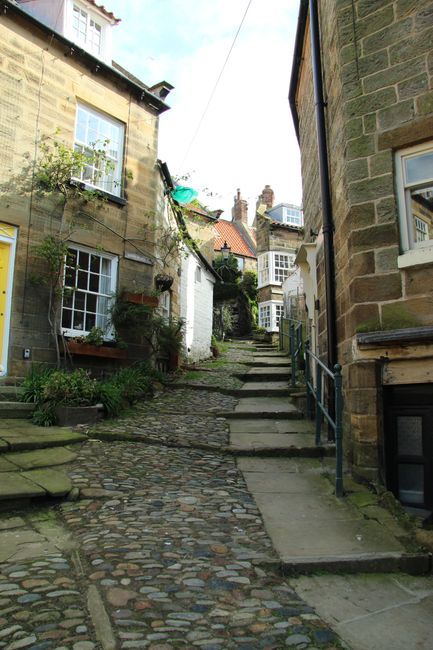
This is the path from the van to the entrance. It includes pavement width, parking position, steps, bollards, shared entrances, and whether there is enough space to manoeuvre larger items without blocking others. In Sands End, this can be the difference between a quick load and a long carry.
2. The building route
Inside the property, the key questions are stair width, ceiling height, landings, door swings, and lift size. A lift may be present but still not be suitable for bulky furniture. Likewise, a stairwell may look usable until you hit a bend halfway down.
3. The item route
Some items can be turned and carried carefully. Others should be dismantled, protected, or moved using specialist handling. Sofas, beds, wardrobes, fridges, desks, and pianos all behave differently. A move becomes much easier when you think about each item in advance rather than as one big pile of "stuff".
In many cases, the move is planned around the hardest object, not the easiest one. That's a small but important mindset shift. If the piano or wardrobe is the awkward piece, the route should be planned for that object first. For more detail on one of the trickier categories, see expert piano moving and why it's usually better to hire than haul.
A practical example: a first-floor flat with a narrow staircase may look manageable for boxes, but a mattress or ottoman bed could still be the problem. The move is not "easy" or "hard" in the abstract. It's easy for some items and awkward for others. That's where the planning lives.
Key Benefits and Practical Advantages
Good planning for narrow street moves brings very real benefits. Not flashy benefits, just the kind that make a moving day feel controlled rather than chaotic.
- Less lifting risk: fewer awkward turns, fewer rushed manoeuvres, and a lower chance of knocks or strains.
- Better time management: if the route is clear, crews can work more steadily and avoid delays.
- Reduced damage: walls, banisters, doors, furniture corners, and lift interiors all benefit from careful planning.
- Cleaner communication: everyone knows what is happening, what needs dismantling, and which items are priority.
- Smarter budgeting: access issues can be anticipated rather than discovered midway through the job.
There's also a quieter benefit: peace of mind. When you know the difficult bits have been checked, the whole day feels less reactive. That matters more than people expect. Moving is tiring enough without the "what if" feeling hanging over it.
If you're still at the organisation stage, it may help to use some decluttering thinking before moving day. Fewer items through a narrow route means fewer opportunities for bottlenecks. Simple, but very effective.
Who This Is For and When It Makes Sense
This kind of move is especially relevant for:
- flat movers in older or compact buildings
- students and sharers in upper-floor accommodation
- families moving larger furniture through narrow hallways
- office teams relocating equipment through limited access points
- anyone dealing with stairs, shared entrances, or small lifts
- people moving on roads where van stopping space is tight
It also makes sense whenever you have one or two items that are awkward rather than heavy. A light but bulky sofa, for example, can be more troublesome than a dense box. Slightly annoying, really. The weight alone does not tell the full story.
If you are moving a bed, a mattress, or a frame with slats and headboard sections, you'll probably find this useful too: hassle-free techniques for moving your bed and mattress. Those items often expose access problems very quickly.
Same applies if you're a student moving out of a compact flat. A shorter move can still be complex if it's all stairs and small doorways. In that case, a look at student removals in Sands End can help frame the kind of support that fits smaller moves without overcomplicating things.
Step-by-Step Guidance
Here's the practical version. Nothing fancy, just the sequence that tends to work best.
- Walk the route in advance. Measure stair width, note turns, check lift dimensions, and look for tight entry points. If you can, do this while standing where the item will actually travel, not just from memory.
- List your awkward items first. Think sofas, beds, wardrobes, mirrors, appliances, pianos, desks, and anything oddly shaped.
- Decide what should be dismantled. A small amount of dismantling can save a lot of strain. Sometimes it's the difference between a smooth carry and a minor comedy of errors.
- Protect the route. Use covers, blankets, and floor protection where appropriate. Banisters and corners are classic damage points.
- Plan the van position. Consider whether the vehicle can park close enough for safe carrying without creating obstruction.
- Assign roles. One person leads, one supports, and nobody tries to be heroic with a staircase. Heroics and banisters do not mix well.
- Move heavier items first. That usually gives you the best energy while the route is still clear.
- Keep the pace controlled. A steady move is safer than a rushed one, especially on stairs or through a lift.
A useful clarification: lifts are only helpful if the item fits cleanly and the route from lift to room is still workable. People sometimes focus on the lift and forget the landing, door frame, or final turn. That's where the snag often lives.
If you want a broader moving framework rather than just the access side, this house-moving guide with a low-stress approach sits nicely alongside this article.
Expert Tips for Better Results
Here are the small things that make a big difference.
Measure with the real object in mind
Don't just measure a sofa or wardrobe at its widest point. Think about the angle it needs to turn, the thickness of handles or feet, and whether it can be tilted safely. A sofa that is 100 cm wide may still fail in a stairwell if the landing forces an awkward pivot.
Take photos of access points
Photos help you notice what the eye misses in person: low ceilings, overhanging rails, tight corners, or odd offsets in the stair design. They also make it easier to brief anyone helping on the day.
Use the lift properly, not optimistically
A lift is a tool, not a promise. Check door clearance, internal space, and weight limits carefully. If the item scrapes the sides on the way in, it's not a good fit. No point pretending otherwise.
Protect hands, floors, and corners
Gloves, proper shoes, furniture blankets, and corner protection are simple measures. But simple is good. Good, even. Especially on a damp morning when everything feels just that bit slippery.
Keep the old home and new home in sync
For tight-route moves, the new place matters as much as the old one. If a sofa can leave easily but cannot turn into the new hallway, you still have a problem. Always check both ends.
For a deeper look at how professionals handle load control and safe body positioning, see the fundamentals of kinetic lifting. And if lifting heavy items on your own is something you are even considering, read proven methods to securely lift heavy items on your own before you commit to anything brave.

Common Mistakes to Avoid
Most access problems come from a few repeat mistakes.
- Not checking the route end to end. People inspect the staircase but forget the front entrance or the final doorway.
- Assuming the lift will solve everything. It won't, if the item is too large or the lift opening is awkward.
- Leaving dismantling too late. What could have been a 10-minute task becomes a rushed one on moving day.
- Overloading one helper. A narrow stairwell is not the place for a one-person hero act.
- Underestimating corners. Corners are where furniture goes to argue with geometry.
- Ignoring parking constraints. A perfect internal plan means very little if the van ends up too far away.
A common one is packing too much into random boxes and then discovering the route requires multiple trips with heavy, uneven loads. That gets old fast. Better to pack in a way that supports the route, not fights it. If you want practical packing help, packing like a pro is a sensible place to start.
And honestly, one of the most overlooked mistakes is not allowing enough time. Tight access almost always takes longer than people think it will. Always. A bit more time at the start beats a lot of panic at the end.
Tools, Resources and Recommendations
You do not need a van full of specialist kit to manage a narrow move well, but the right basics help a lot.
| Tool or resource | What it helps with | Why it matters on narrow routes |
|---|---|---|
| Furniture blankets | Protecting surfaces and item edges | Reduces scuffs on tight corners and stair rails |
| Straps and grips | Controlled handling | Helps maintain balance on stairs and landings |
| Floor protection | Protecting floors and thresholds | Useful when items need several passes through the same route |
| Measuring tape | Checking access dimensions | Essential for lift doors, stair width, and large furniture |
| Basic dismantling tools | Removing legs, headboards, or shelving | Can turn a bad fit into a workable one |
| Clear labels | Keeping loads organised | Makes staged moving easier when access is tight |
For many movers, the simplest win is decluttering before the move, then packing in a logical order. That reduces carry count and makes the route easier to manage. If you need extra storage during the process, storage in Sands End can be a useful bridge between homes.
If you're also dealing with furniture that needs careful handling or temporary holding, it's worth looking at furniture removals in Sands End. It's a helpful fit when individual items are the main concern rather than a huge household shift.
Law, Compliance, Standards and Best Practice
For most household moves, the main compliance concerns are practical rather than legal drama. The core expectation is that work is carried out safely, vehicles are parked responsibly, and handling is done in a way that reduces the risk of injury or damage.
In the UK, reputable removal work is generally guided by safe manual handling practice, sensible load management, and appropriate insurance cover. That means a careful mover should think about weight, shape, route, visibility, and team coordination before lifting. If the job involves narrow stairs, the expectation is not to "push through"; it is to assess the route and adapt.
Best practice also includes clear communication. If a lift is too small, or a stairwell is unsuitable for a certain item, that should be identified early. No one benefits from discovering it halfway through the carry. Not the customer, not the crew, not the wall plaster.
If you want to understand how the company approaches safety and risk management more broadly, it can help to review a few trust pages such as health and safety policy and insurance and safety. Those pages explain the kind of standards a careful removals provider should take seriously.
For some readers, accessibility matters too. Buildings and routes should be considered in a way that respects different needs, especially when shared entrances, lifts, and steps are involved. A plain-language accessibility statement can be a reassuring sign that access is being taken seriously.
Options, Methods, and Comparison Table
There isn't one perfect method for every narrow street move. The right approach depends on the item, the route, and how much time you have.
| Method | Best for | Advantages | Watch-outs |
|---|---|---|---|
| Stair carry | Items that are manageable and well-balanced | Often direct and flexible | Higher physical strain; awkward on tight turns |
| Lift-assisted move | Smaller furniture and box loads | Can reduce carrying distance | Only works if dimensions and access line up |
| Dismantle and reassemble | Beds, wardrobes, desks, modular furniture | Makes bulky pieces more manageable | Needs tools and a bit of time |
| Specialist handling | Pianos, large appliances, fragile or heavy items | Improves safety and control | May need more planning and the right team |
| Temporary storage | Moves with timing gaps or access delays | Reduces pressure on moving day | Adds an extra handling stage |
To be fair, many moves use a mix of these methods. That is normal. A wardrobe may be dismantled, a mattress carried via stairs, and a handful of boxes moved by lift. The smart move is not sticking to one method out of habit. It's choosing the least risky option for each item.
Case Study or Real-World Example
Imagine a modest flat move in Sands End on a narrow residential street. There's no private driveway, the stairs are compact, and the lift is available but not especially generous. The main items are a sofa, a double bed, two chests of drawers, several boxes, and a dining table with detachable legs.
The move starts with a route check. The sofa is measured against the stair landing and the lift opening, and it is clear that the lift is not the best route for it. The bed is dismantled in advance, which removes a lot of pressure later. The dining table is separated into parts. Boxes are grouped by weight rather than just by room, which means no one is left carrying a box full of books that feels like a brick.
On moving day, the van parks as close as possible without blocking the road. That alone saves a lot of legwork. The team moves the bulky sofa first, while everyone is fresh. A blanket is used on the stair edge where the turn is tight. Nothing dramatic happens, which is exactly the point.
The result is not a glossy, storybook move. It is just a controlled one. No scraped wall. No frantic re-lifting. No "we thought it would fit" moment. That's the win. Quiet competence.
If a last-minute timetable change had forced overnight holding, same day removals in Sands End or a short storage solution might have been the practical back-up. And if you are moving from a nearby high-density route, the local access notes in this Imperial Wharf access guide can also give you a useful sense of how route planning changes around busy transport-adjacent streets.
Practical Checklist
- Measure stair width, door frames, lift doors, and landings.
- Identify the largest and most awkward items first.
- Decide in advance what should be dismantled.
- Check where the van can stop safely.
- Protect floors, corners, and banisters.
- Pack boxes by weight, not just by room.
- Use clear labels for fragile or heavy items.
- Confirm whether any item needs specialist handling.
- Allow extra time for stairs, lifts, and narrow turns.
- Keep a simple tool kit close to hand.
- Make sure everyone knows the moving order.
- Have a backup plan for parking or access delays.
If waste or unwanted items are part of the job, it's a good idea to sort that early too. You can keep the move cleaner and avoid cluttering the route by looking at bulky waste removal in Sands End before moving day.
Conclusion
Narrow street moves in Sands End are not usually difficult because of one big problem. They're difficult because of lots of small ones at once: stairs that twist, lifts that barely fit, items that are just a touch too bulky, and van access that needs thought. Once you accept that access is part of the move itself, everything gets easier to manage.
The best approach is simple: measure carefully, reduce clutter, dismantle where needed, protect the route, and keep the pace steady. Do that, and even a tight move can feel calm and controlled. Not perfect, maybe. But solid. And solid is what you want on moving day.
For a broader understanding of the moving process and how to keep things organised from start to finish, you may also find it useful to review services overview and man with a van Sands End as part of your planning. If you'd rather hand off the hard bits, that can be a very sensible choice too.
Get a free quote today and see how much you can save.